


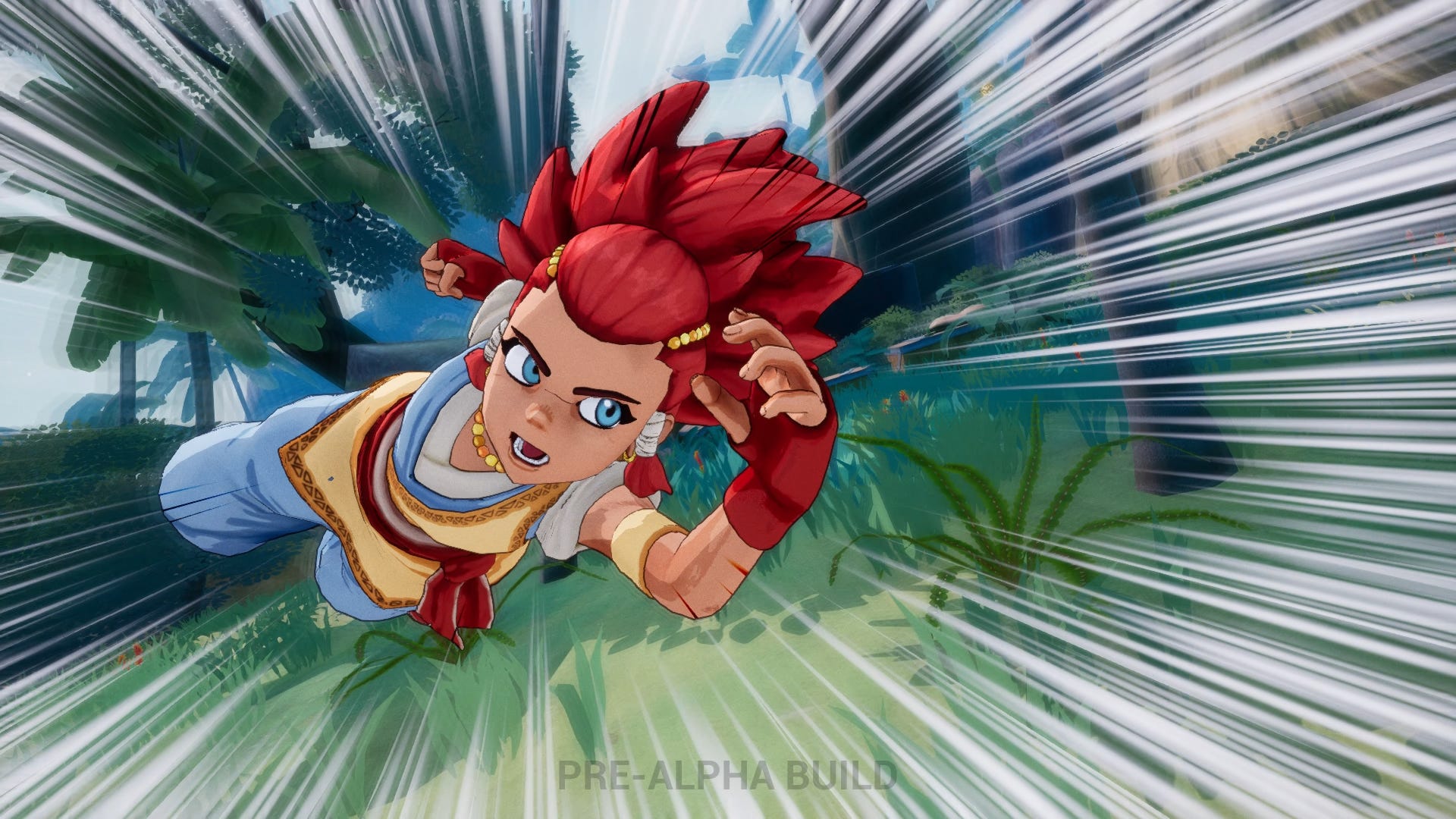
A Fighter’s Nova: Mindara is built off of one of the most underappreciated concepts from Street Fighter 6. The elder fighting game created an entire JRPG out of its campaign mode with a simple but innovative concept: choosing which people you fight, creating a great risk-reward system. I felt it’s how Street Fighter campaigns should go moving forward. Mindara takes that concept and makes a JRPG tag fighter while sticking to more traditional JRPG elements. Like Ithaca, Mindara is very early in production. But unlike Ithaca, this game focuses squarely on its concept and presents with a level of polish that’s appropriate for a first impression.
You play as Maya. We don’t know much about her backstory, but she’s traveling in this unnamed world with the intent to help people and, what seems like, change her tribe’s xenophobic perspectives. Based on the number of JRPG’s that explore this concept, I’d already assume those perspectives come from the tribes’ leaders, or they’re influenced by a much bigger threat targeting the world. I could be way off, but even if I’m not, it’s a story I’m willing to play through if the gameplay continues to improve what’s working in this demo.
Like any other JRPG, you’ll run around an overworld encountering enemies along the way. But fights are transformed into full 2D fighting matches with specials, supers, tag mechanics, combos, and everything else you’d expect from a 2D fighter. The fights feel good even in this early state—a little clunky, but good. The sound effects enhance the punches, the combos feel natural, and it feels like there’s a lot of variety. I spammed the combo I found worked very well, but if I wanted to mix it up, it seems I could.
Basic enemy encounters might be too long in the current state, though. I felt like some of the fights felt too much like an actual arcade match. This is still an RPG. Early fights shouldn’t take very long, even at similar levels. It would have been very tiring if all of the campaign fights in Street Fighter 6 felt like a regular arcade match.
After rounds, you’re scored on your offense, defense, technique, and co-op. I consistently scored low on technique, which I imagine is shorthand for variety. My concern about all games that score in this way is that you’re punished for playing the fight in front of you or for using an optimal combo. A hypothetical: sometimes an enemy might be tuned to punish tags, so it’s advantageous to stick with one player, but your score is reduced because you didn’t tag enough. That’s not right. It’s never been. I hope this game figures out how to do it well.
Some expected issues occurred in the pre-alpha. In training mode, the camera leaps off-center when performing a power hit; I feel like the hitboxes are way too big; and while most of my combos felt viable, there were some strings I felt shouldn’t work, particularly after the enemy hits the ground off of a basic combo, not a knockdown or a bounce.
What stood out was the music. No wonder. Hiroki Kikuta, composer of Secret of Mana, is creating the soundtrack for this world. I hope the game lives up to the expectations the soundtrack will bring.
Try A Fighter’s Nova: Mindara.
Thank you for reading The Daily Demo! Did you play it? What’d you think of it? I’d love to hear your thoughts.