


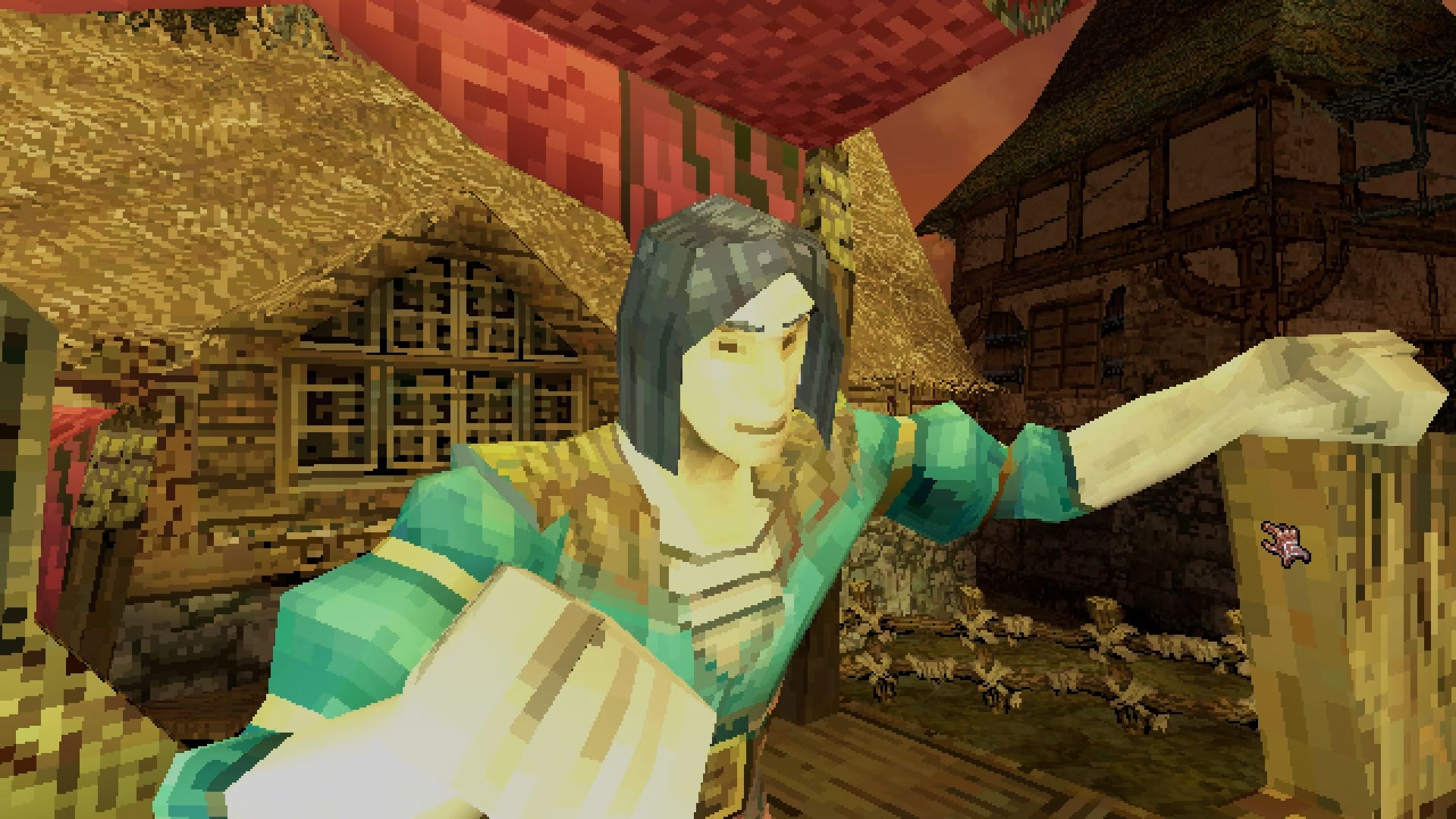
Entropy’s story begins as chaotic as the definition of the title. You take the role of a theater actor who is thrust into a terrible battle with demons who have inexplicably invaded your town. It seems the demons weren’t supposed to reach as far as they did, but you take up arms with fellow soldiers. You die. What happens after that is unclear. Did a spirit take over the heroes dead body? Was the monologue of the living person but you can see the spirit? I couldn’t figure it out. Either way, you end up living, and for some reason you are burdened with traveling to another town called Tourmaline. Why? “Nobody knows” the game says. But you must go because the game demands it. All it’s missing is the phrase “Would you kindly?”
For an opening that seemed to veer into developing character, even briefly, that’s completely gone once you start the game. You died fighting while drunk; you arise as a potential hero. Now I have more questions. It’s possible the full game can answer those questions but we’re talking about first impressions here, a demonstration of what will be. And what I see is fragmented storytelling attempting to withhold useful plot development to lure us to keep going. It’s not alluring. It’s bewildering. Balancing plot teases is difficult, but if this is how Entropy will be, I can’t imagine this will be good.
The turn-based mechanics hold up, though they have their own quirks. Combat has options for basic attacks, targeted attacks aiming for specific limbs to dismember or disable, and skilled attacks. Mechanically, these options create interesting choice. You have to decide between these attacks based on how they will help you (or hinder) or by the odds it will hit. Unfortunately, there is a lot of whiffed or backfiring attacks, which can be very costly because party members can potentially die. If they do fall in battle, the game randomly decides after the fight if they actually lived or died.
Whether your party lives or dies is more relevant to your survival than the story. When I lose characters in Fire Emblem, I’m endeared to them. In this, they can be mercenaries or characters I picked up along the way because they need help, but I just need another body so I’m not absorbing all the attacks.
Chance is how most of Entropy functions. It’s a lot of dice rolling. One attack has a 65% chance of hitting, but you can dismember the enemy and they drop their weapon. But there’s also a chance the enemy doesn’t become dismembered, so should you just use a regular attack with more damage? Or should you use a skilled attack and lose a turn? I can’t remember a time where a turn-based game had combat mechanics with almost no upside. You’re always left to chance, which feels unnecessarily punishing, and doesn’t make the game or the story better.
The minimal grid system has a lot of potential. Your party is lined up in two rows. The front row protects people in the back row (the game says “directly behind them” but they’re lined up off-center from each other, so I don’t know what directly means). Characters in the back row behind party members can’t be targeted with melee attacks but can be hit by ranged attacks. Back row characters can’t use melee attacks, only ranged. It’s an interesting mechanic I didn’t utilize as much since I only had two party members most of my playthrough, but in hindsight, I probably could have used it more often.
Other oddities plague this game like the camera is defaulted to moving in reverse—left is right. Why that was acceptable, even in a demo, I’ll never know. And the graphics are atrocious. I’ve seen several people say they like the PS1-era graphics, and I’d like to know what era of PS1 they’re referring to. The entire game is pixelated as if the they have a memory budget of a PS1. Yes, some graphical rough edges existed during the PS1, but the intense pixelation was mostly reserved for backgrounds that had little need for high-quality textures, or close-ups. Racing games had these kind of low-texture graphics in some instances. But we’re in 2026. Anti-aliasing has been a thing for a long time now. Even emulators provide it. Clarity is king. It’s always been king. You see how clean this looks? There is nothing captivating about that much pixelation across every moment of the game.
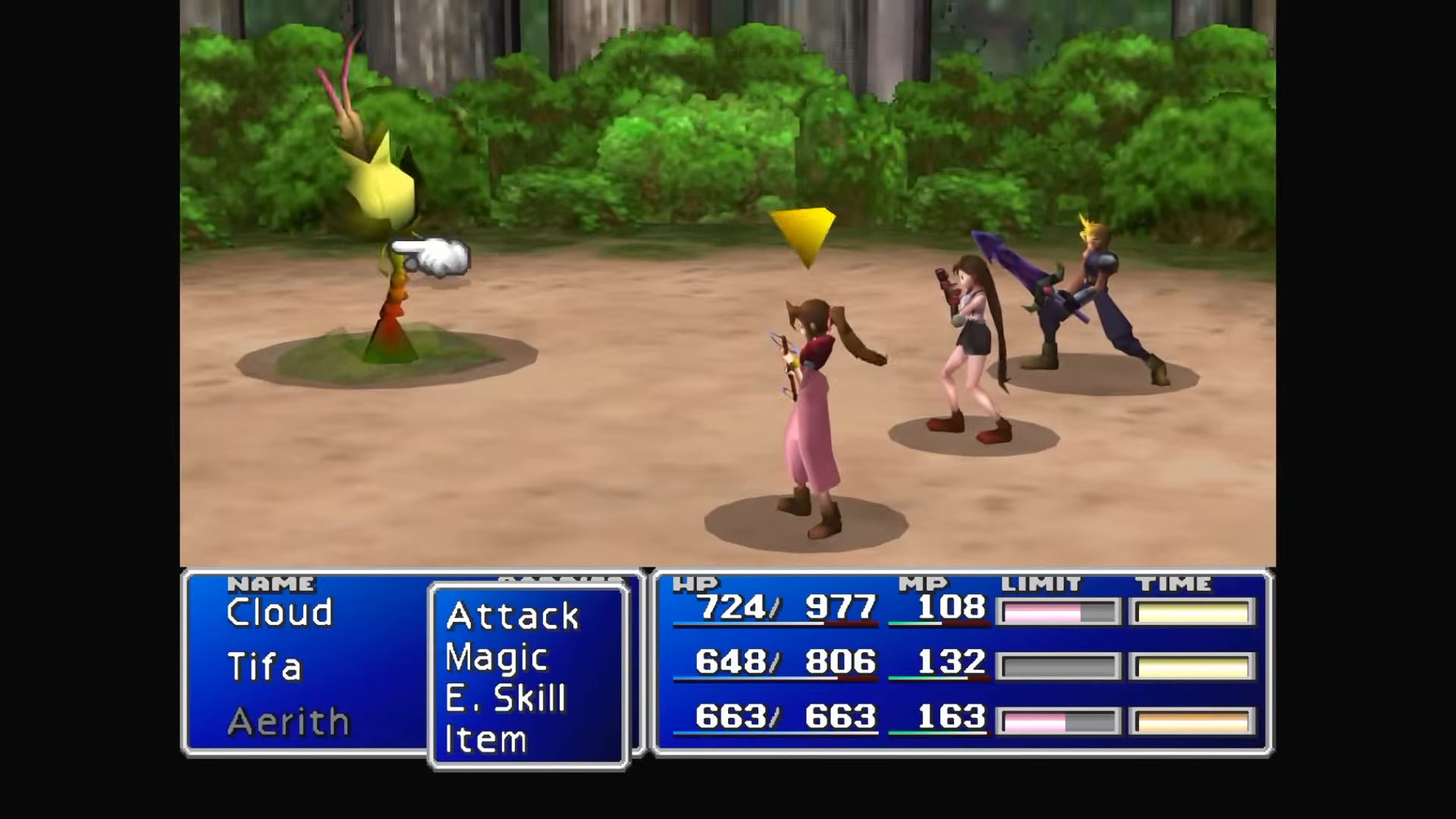
The sounds make me want to puke, too. I’ll pass by, what I think is, a furnace and it sounds like a kitchen sink draining tin cans inside an empty cathedral. Fire sounds like leaves rustling in the wind. Poison attacks sound like teddy bears squeaks.
It’s easy to dismiss these things as part of a demo, and that it will launch into Early Access, but it’s about respect. You can have much better, even in a demo. These are the sound effects they chose. They uploaded this with default camera controls that are backwards. Animations are unnecessarily slow. The character’s run speed looks like he’s sliding in place and not going anywhere. These are not design choices that require weeks of improvement. This is what they want to show off to you. That’s poor judgment. The developers are taking advantage of goodwill. We excuse what we want to like, but it’s best to demand better. These developers have the experience. They can make even a demo better.