


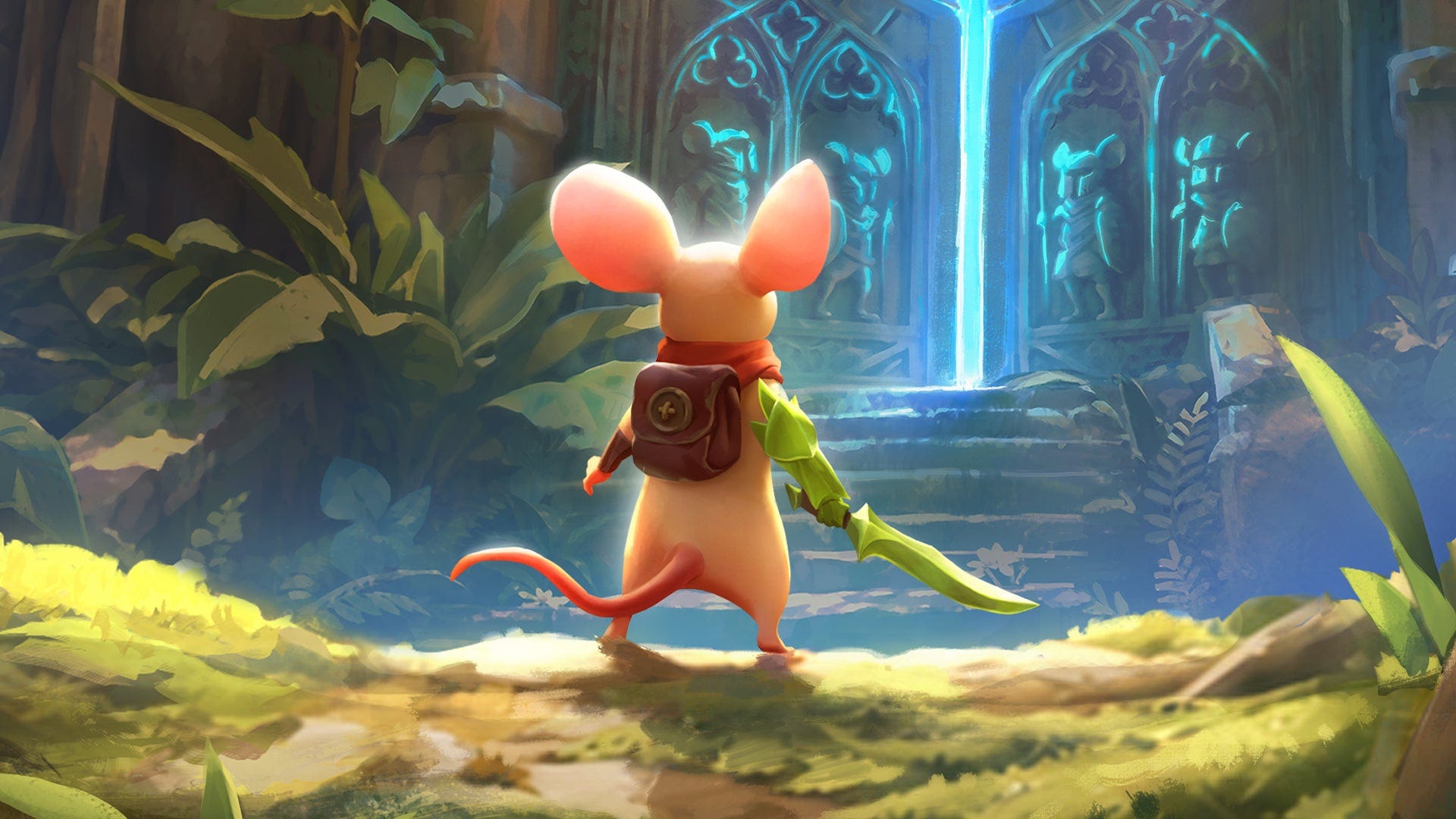
I didn’t play Moss on VR, but had I not known it was ever on VR platforms, I would’ve been able to tell. You are the reader, controlling the cute rodent hero, and sometimes she breaks the fourth wall and looks at you. Because that’s what happens in virtual reality experiences. For some reason, putting on a headset suddenly meant you existed in the world, and the entities within it needed to interact with you. You couldn’t just be a fly on the wall who enjoyed the immersion; you had to participate. That was useful for non-interactive experiences. That carries over into the non-VR version of Moss, and it’s outdated.
Sections of a level are broken into very small chunks. You enter a room, solve a quick puzzle, and you’re off to the next one. I imagine these were broken into small chunks so the VR hardware performed well. Maybe not, but it’s strange to go into a room, fight an enemy, and move on to another room. It’s even stranger when there are no puzzles or enemies—nothing. That happened two times. I’m not sure why the developers did that.
Moss is a story told through a storyteller who sounds like they’re reading to a child. They change their voice for each character. It’s a charming and affordable way of allowing us into the tale. I only wish the storyteller didn’t speak while I concentrate on platforming.
Puzzles are thoughtful and resemble a mix of specific room puzzles and larger Zelda/Metroid-type puzzles where you must have an item to move forward. You control a blue sphere that can pull things around or turn into objects you need. Again, it’s another VR holdover. It’s easy to wand the orb around with motion controls, but since I’m using a gamepad, the right trigger does that work now. The puzzles become more clever over time in the demo, so I imagine they will get pretty involved in the later parts of the game, but you do have to contend with deciphering the environment.
Thank you for reading The Daily Demo! Did you play it? What’d you think of it? I’d love to hear your thoughts.