


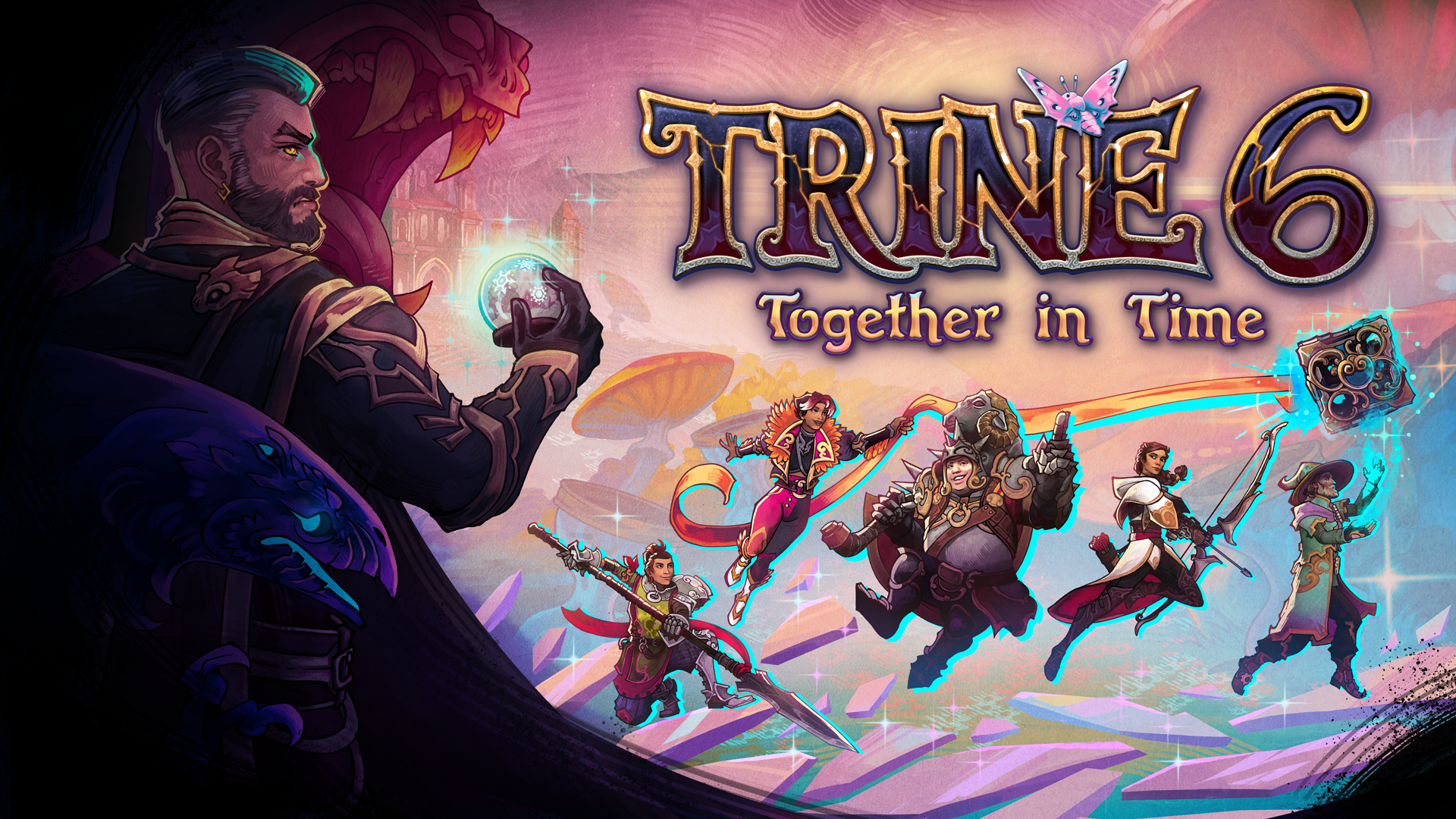
Trine 6: Together in Time is already confounding people. Some don’t like the way it looks, suggesting Trine 2 looks better. What they remember is mostly glowing things. Lighting wasn’t as sophisticated as it is now, so to make it more magical looking, almost everything that lights up glows. It’s beautiful, but everything is also darker. Trine 6 is lit with modern lighting. Some things glow, but it’s less like a candle and more like something that properly glows in the dark. It’s still pretty, it’s just different.
The levels shown off in the demo aren’t what people remember of a classic Trine landscape. The first level is a castle, and the second is a swamp. Both are traditionally fantasy settings in many entertainment media, and they serve the design well. It’s immediately Trine with its curvy designs, teetering between realistic and cartoony. They are lit brightly, with little room for stark contrast, and that’s probably what’s confusing people, but they can have these kinds of areas because the shadows are much more sophisticated. Everything doesn’t need to be dark to hide that shadows couldn’t be replicated as well in the past.
Where Trine 6 continues to excel is its puzzle design. You’re given a shield that can bounce balls of light off it, which creates some mentally tricky puzzles. Trine has been the platformer that requires thinking before proceeding. But it doesn’t copy from the likes of modern puzzle-platformers like Celeste. It maintains its identity by manipulating environments and magical objects to reach the other side. The puzzles still feel inorganic—they always have—but they’re satisfying to solve. It’s a combination of object manipulation and platforming timing.
One puzzle I liked involved the ball-and-shield combo. Above were destructible stones, and I had to guide myself with my shield pointed skyward like it was a game of Breakout.
I haven’t played the Trine franchise in a while, so I forgot how bad jumping is. It never feels natural. You burst from the ground, float at the apex, and drop like a rock. Distance is deceptive, too. I died a few times thinking the jump lasts long enough to reach a height, but I’m tricked by how short your float at the apex. Jumps should be consistent from jump. It should be easy to understand. It’s why Super Mario jumps are so easy to understand, and many platformers still use that as a good benchmark. But even in cases like Super Meat Boy or Celeste that make theirs extra floaty or extra weighty, respectively, you can immediately feel what you can and can’t get away with. Trine seems content with this abomination of a jump.